Event 2
Event 2 (Participated Offline): AWS Cloud, Monitoring and Security - 11/07/2026
1. Overview
This technical event focused on Service Level Agreements (SLAs), application observability, AWS certification strategies, and AI-driven automated security assessments.
The primary objective was to demonstrate that green infrastructure metrics alone do not guarantee a seamless user experience, and that security controls must be embedded throughout the entire software development lifecycle.
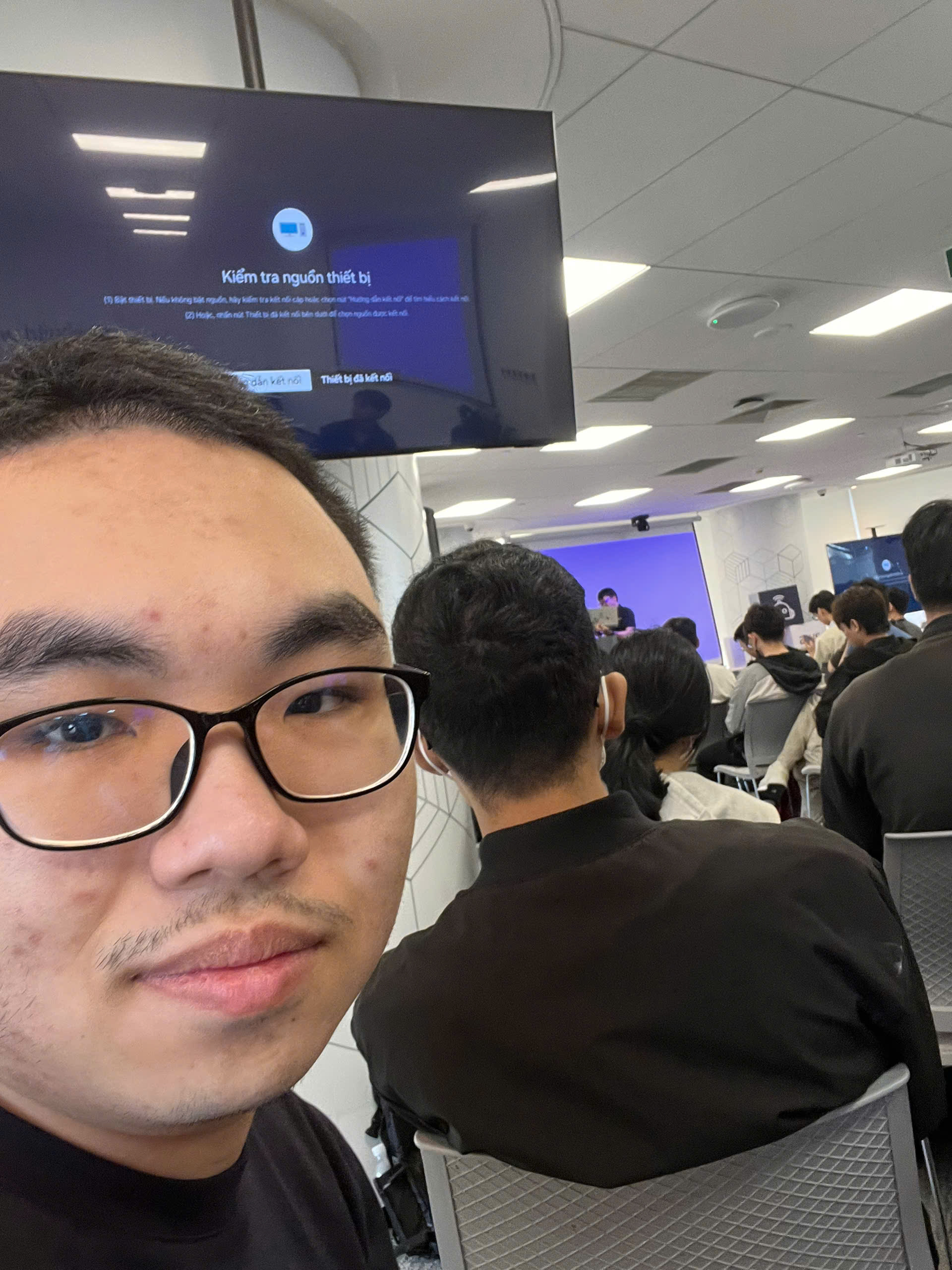
2. Technical Sessions & Core Topics
2.1. SLA and Monitoring: What Really Matters — Son Nguyen
This session highlighted the critical distinction between underlying infrastructure status and actual user experience.
While a Service Level Agreement (SLA) defines contractual availability guarantees between cloud providers and customers, provider SLAs do not account for application-layer failures—such as broken authentication flows or database query timeouts.
Key conceptual takeaways included:
- Risk Governance Loop: Identify risk $\rightarrow$ Monitor signals $\rightarrow$ Respond $\rightarrow$ Continuous improvement.
- Observability Hierarchy: Infrastructure metrics $\rightarrow$ Application metrics $\rightarrow$ Customer journey metrics $\rightarrow$ Business outcome signals.
- Core Principle: “Healthy Infrastructure $\neq$ Healthy User Experience”.
2.2. Inside the Exam: AWS Cloud Practitioner — Huy Ngo
This presentation delivered a structured preparation strategy for the AWS Certified Cloud Practitioner (CLF-C02) exam across its four core domains:
- Domain 1: Cloud Concepts (24%)
- Domain 2: Security and Compliance (30%)
- Domain 3: Cloud Technology and Services (34%)
- Domain 4: Billing, Pricing, and Support (12%)
The speaker emphasized keyword-scenario association, hands-on AWS Free Tier practice, analyzing incorrect mock options, and effective time management techniques.
2.3. Securing Web Applications with AWS Security Agent — Thinh Nguyen
This session introduced automated DevSecOps security auditing powered by Amazon Bedrock:
- Architecture Security Auditing: Scanning design diagrams and IaC templates against PCI DSS, NIST, and Well-Architected guidelines.
- Code Repository Auditing: Automated pull-request inspection to catch vulnerabilities and hardcoded credentials.
- Autonomous Penetration Testing: Multi-step exploit verification generating clear, actionable attack graphs.
Current operational boundaries discussed included authentication hurdles (MFA/mTLS), domain logic context limits, and task-hour execution costs.
3. Key Learnings & Practical Takeaways
- Effective system monitoring must prioritize end-to-end customer journey metrics over isolated CPU or RAM metrics.
- Application developers share responsibility under the AWS Shared Responsibility Model for securing code and data.
- AI Security Agents significantly accelerate security code reviews, but human engineering oversight remains essential.
4. Event Feedback
The event delivered an outstanding balance of cloud operations, certification strategies, and cutting-edge DevSecOps tooling.
5. Next Steps & Personal Implementation
- Continue systematic preparation toward achieving the AWS Certified Cloud Practitioner credential.
- Incorporate customer journey monitoring principles into my ongoing internship projects.
- Implement static security reviews on IaC templates earlier in the development lifecycle.